Who is a landlord?
The landlord, by definition, is the owner of the property. Landlords alone have the right to file a lawsuit under Chapter 83, Florida Statutes. There are limited exceptions for a property manager to do so, but that is another topic for another post. To find out who the actual landlord of a property is, look it up either in the official records of the county (the deed) or the property appraiser's database.
But I'm definitely the landlord, why should I look it up?
Ok. I will not disagree with you. However some landlords have lost money to me on that assertion. If you placed the home under a business entity or trust account, "you" are not the landlord, the business or trust account is the landlord. "You" are the property manager. If you file an action to evict somebody from the property and that person walks into my office you are in for a world of hurt.
I just found out that my tenant has subleased the property but the lease agreement does not allow that. What can I do?
You can send a seven-day notice of material non-compliance to the actual tenant informing them that subleasing is not permitted and giving them seven days to remove the occupant. If they fail to do so within seven days you can file an eviction action against them. If the lease agreement is an oral (unwritten) lease agreement, then you will need to prove to the Court that part of the agreement was that subleasing was not permitted. That will be a difficult task indeed once the tenant testifies that no such discussion took place.
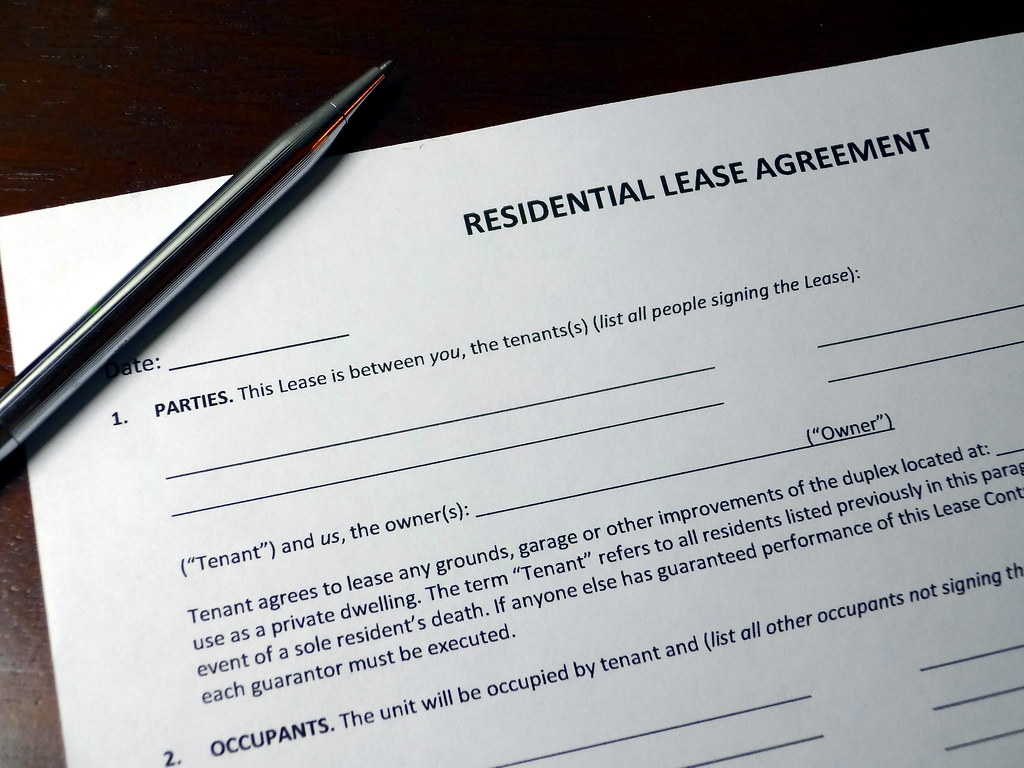 |
A written lease agreement setting out the terms of the landlord-
tenant relationship can be one of the most important documents
protecting the rights of both parties to such a relationship. While
oral agreements (unwritten) are permitted, they are difficult to
interpret and/or enforce. For best results, get it in writing.
|
Who is a tenant?
A tenant is a person who pays rent to the landlord or the landlord's designated agent. The landlord-tenant relationship exists if there is an agreement to occupy another's property in exchange for money (or sometimes work). If "rent" is being paid to somebody other than the landlord under a contract, then there is no landlord-tenant relationship. This mistake often occurs when the "property manager" (I use that term loosely) drafts the contract and place themselves in the landlord position. Not only is it a misrepresentation, but this type of mistake fails to create privity between the landlord and the "tenant" who is technically an occupant. A ratification can correct the privity problem but must be done correctly so as to not run afoul of the requirements of Florida law.
If I am renting property from a tenant: am I a tenant?
You are a tenant if and only if you have paid rent to the property owner directly, not through the actual tenant unless that tenant is a property manager to the landlord as well. It would be highly recommended that you actually get a copy of the lease agreement that the tenant is operating under. Many leases forbid subleases and therefore the act of moving in without the actual landlord's permission would create grounds for the tenant (and you) to get evicted.
If you have never paid rent to the landlord or to the landlord's property manager or agent, you are an occupant. Occupant rights rise and fall with the lease agreement.
The tenant I am renting from is threatening to evict me, is that legal?
A tenant may not evict a person from the property. Only a landlord can file an eviction. A property manager can file a single count non-contested eviction to completion, but once the matter is contested only the landlord (if a natural person) can proceed pro se or hire an attorney to proceed on the landlord's behalf.
Who is an occupant?
An occupant is any person who resides on the landlord's property either through a sublease, as a long-term guest, or as a result of their familial relationship with the tenant (ie: minor children). An occupant has never paid rent to the landlord and therefore their rights rise and fall with the lease agreement. Occupants should never be listed on an eviction action. If you never paid rent to the landlord and happen to be served with an eviction complaint you can defend on privity and your status as a non-tenant.
Minor children are the most common (in my experience) occupant. They should not be listed on the lease agreement by name and instead as Minor Child 1, Minor Child 2,... etc, or by their initials. Remember that should an eviction action be filed the lease agreement needs to be attached. Minor children should never be named in a complaint and should not be named as a party defendant. It is a violation of the rules of procedure in Florida and depending on the disposition of the judge may
Minor children are the most common (in my experience) occupant. They should not be listed on the lease agreement by name and instead as Minor Child 1, Minor Child 2,... etc, or by their initials. Remember that should an eviction action be filed the lease agreement needs to be attached. Minor children should never be named in a complaint and should not be named as a party defendant. It is a violation of the rules of procedure in Florida and depending on the disposition of the judge may
So who can sue who?
Under Chapter 83, Florida Statutes a tenant and landlord may sue each other. An occupant, on the other hand, has no standing to sue the landlord or the tenant. Neither the landlord nor the tenant has standing to sue an occupant.
Landlord-tenant law in Florida seems relatively straightforward until attorneys get involved. The landmines found throughout the statutory framework in Florida can have financially devastating consequences for landlords, tenants, and occupants who are not familiar with the nuances of the practice area. For example:
- Landlord files an eviction action against Tenant1, Tenant2, and Occupant1. Occupant1 grabs an attorney who moves to dismiss and because there is no privity the dismissal is granted. A motion for attorney's fees for anywhere between $1000-$1500 can be anticipated.
On the flip side, Occupant1 does not obtain an attorney and fails to answer appropriately. The attorney who files the action files a motion for attorney's fees. If Occupant1 fails to notify the court that privity does not exist Occupant1 may be on the hook for attorney fees even if unjustified. Unrepresented occupants should realize that the court is not there to represent them.
- Property manager "landlord" files an eviction action against Tenant1, Tenant2, and Occupant1. All three go find attorneys who agree to represent them after discovering that the "landlord" is actually not the person who filed the suit, but a business entity owned by the "landlord". Three motions to dismiss are filed (all three for "lack of standing" and one for "privity) and are granted. Three motions for attorneys fees later and the property manager may be out between $1500 and $3000. Not good.
Learn from the mistakes of others.
The law firm the author words for has represented many tenants and occupants against landlords or "landlords" who are later shocked to find that they are on the hook for thousands of dollars in attorney fees. The same firm represents landlords who are often at wits end dealing with tenants and occupants they cannot seem to have removed from the property.
