Saturday, October 15, 2016

The Pitfalls of Subleasing

Often in this economy, tenants are short on cash and sublease (whether authorized to or not) to others who are not on the lease agreement with the landlord. Whether the person subleasing from the tenant is a tenant themselves or an "occupant" is fact dependent. So let's get to it:

Who is a landlord?

The landlord, by definition, is the owner of the property. Landlords alone have the right to file a lawsuit under Chapter 83, Florida Statutes. There are limited exceptions for a property manager to do so, but that is another topic for another post. To find out who the actual landlord of a property is, look it up either in the official records of the county (the deed) or the property appraiser's database. 

But I'm definitely the landlord, why should I look it up?

Ok. I will not disagree with you. However some landlords have lost money to me on that assertion. If you placed the home under a business entity or trust account, "you" are not the landlord, the business or trust account is the landlord. "You" are the property manager. If you file an action to evict somebody from the property and that person walks into my office you are in for a world of hurt.

I just found out that my tenant has subleased the property but the lease agreement does not allow that. What can I do?

You can send a seven-day notice of material non-compliance to the actual tenant informing them that subleasing is not permitted and giving them seven days to remove the occupant. If they fail to do so within seven days you can file an eviction action against them. If the lease agreement is an oral (unwritten) lease agreement, then you will need to prove to the Court that part of the agreement was that subleasing was not permitted. That will be a difficult task indeed once the tenant testifies that no such discussion took place.
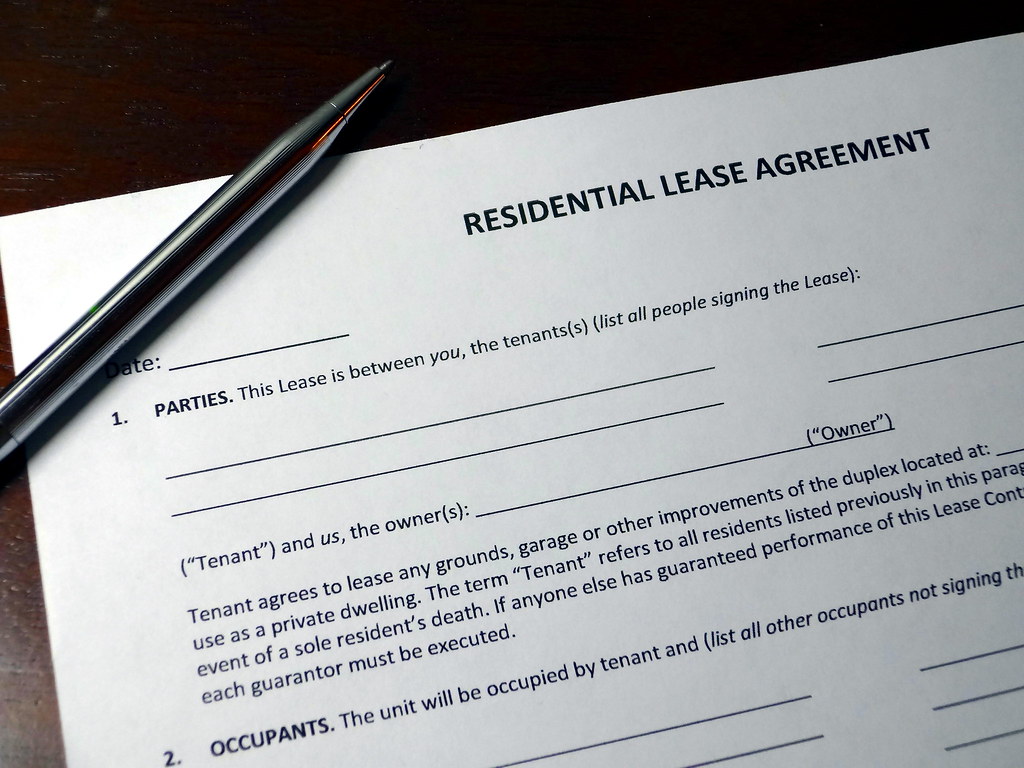

A written lease agreement setting out the terms of the landlord-
tenant relationship can be one of the most important documents
protecting the rights of both parties to such a relationship. While
oral agreements (unwritten) are permitted, they are difficult to 
interpret and/or enforce. For best results, get it in writing.
Who is a tenant?

A tenant is a person who pays rent to the landlord or the landlord's designated agent. The landlord-tenant relationship exists if there is an agreement to occupy another's property in exchange for money (or sometimes work). If "rent" is being paid to somebody other than the landlord under a contract, then there is no landlord-tenant relationship. This mistake often occurs when the "property manager" (I use that term loosely) drafts the contract and place themselves in the landlord position. Not only is it a misrepresentation, but this type of mistake fails to create privity between the landlord and the "tenant" who is technically an occupant. A ratification can correct the privity problem but must be done correctly so as to not run afoul of the requirements of Florida law.

If I am renting property from a tenant: am I a tenant?

You are a tenant if and only if you have paid rent to the property owner directly, not through the actual tenant unless that tenant is a property manager to the landlord as well. It would be highly recommended that you actually get a copy of the lease agreement that the tenant is operating under. Many leases forbid subleases and therefore the act of moving in without the actual landlord's permission would create grounds for the tenant (and you) to get evicted.

If you have never paid rent to the landlord or to the landlord's property manager or agent, you are an occupant. Occupant rights rise and fall with the lease agreement.


The tenant I am renting from is threatening to evict me, is that legal?

A tenant may not evict a person from the property. Only a landlord can file an eviction. A property manager can file a single count non-contested eviction to completion, but once the matter is contested only the landlord (if a natural person) can proceed pro se or hire an attorney to proceed on the landlord's behalf.

Who is an occupant?

An occupant is any person who resides on the landlord's property either through a sublease, as a long-term guest, or as a result of their familial relationship with the tenant (ie: minor children). An occupant has never paid rent to the landlord and therefore their rights rise and fall with the lease agreement. Occupants should never be listed on an eviction action. If you never paid rent to the landlord and happen to be served with an eviction complaint you can defend on privity and your status as a non-tenant.

Minor children are the most common (in my experience) occupant. They should not be listed on the lease agreement by name and instead as Minor Child 1, Minor Child 2,... etc, or by their initials. Remember that should an eviction action be filed the lease agreement needs to be attached. Minor children should never be named in a complaint and should not be named as a party defendant. It is a violation of the rules of procedure in Florida and depending on the disposition of the judge may 

So who can sue who?

Under Chapter 83, Florida Statutes a tenant and landlord may sue each other. An occupant, on the other hand, has no standing to sue the landlord or the tenant. Neither the landlord nor the tenant has standing to sue an occupant.

Landlord-tenant law in Florida seems relatively straightforward until attorneys get involved. The landmines found throughout the statutory framework in Florida can have financially devastating consequences for landlords, tenants, and occupants who are not familiar with the nuances of the practice area. For example:

- Landlord files an eviction action against Tenant1, Tenant2, and Occupant1. Occupant1 grabs an attorney who moves to dismiss and because there is no privity the dismissal is granted. A motion for attorney's fees for anywhere between $1000-$1500 can be anticipated.

On the flip side, Occupant1 does not obtain an attorney and fails to answer appropriately. The attorney who files the action files a motion for attorney's fees. If Occupant1 fails to notify the court that privity does not exist Occupant1 may be on the hook for attorney fees even if unjustified. Unrepresented occupants should realize that the court is not there to represent them.

- Property manager "landlord" files an eviction action against Tenant1, Tenant2, and Occupant1. All three go find attorneys who agree to represent them after discovering that the "landlord" is actually not the person who filed the suit, but a business entity owned by the "landlord". Three motions to dismiss are filed (all three for "lack of standing" and one for "privity) and are granted. Three motions for attorneys fees later and the property manager may be out between $1500 and $3000. Not good.

Learn from the mistakes of others.

The law firm the author words for has represented many tenants and occupants against landlords  or "landlords" who are later shocked to find that they are on the hook for thousands of dollars in attorney fees. The same firm represents landlords who are often at wits end dealing with tenants and occupants they cannot seem to have removed from the property.

Friday, December 11, 2015

Jimmy Davis nominated as one of "10 best" Attorneys in Florida - and why this does not matter.

Imagine my surprise, and the amount of ego inflating pride I felt when I got this letter in the mail that states "Congratulations! We are pleased to announce that you have been nominated as one of the '10 Best' Attorneys for Florida. This came from an organization called the "American Institute of Family Law Attorneys".

I blushed with pride, and smiled ear to ear. I said to everybody near my P.O. Box, "Look, I'm the best attorney ever!" (I did not really do that, but you know...)

Here is the instantaneous problem with this reward. I have barely dabbled in family law. My results have been good by all accounts, but one of the 10 best? I think not. This, my curious readers, is what one calls a "vanity award". Should I pay for this award, I will instantly go from nominated to winner. Congratulations me!
Oh Vanity Award, your name is Narcissus
As a consumer of legal services, or an attorney, it should be pretty clear why these pseudo awards should not be utilized by attorneys to promote their skills. Similar to paying for a noble title, paying for an award is not only a hollow victory, but it may very well show how unethical attorney marketing may be. Consider in Florida

Rules 4-7.13(a)(2), (b)(2), (b)(3) and Rules 4-7.14(a)(2)

If an attorney were to use this on advertising material, these rules require that attorney to determine whether the advertisement contains any reference to past results that cannot be objectively verifiable; whether it omits material information; or if "literally accurate" would it have the potential to mislead a would-be client regarding a material fact.

In this case, the answer is yes, yes, and yes. Sure my past results are good, but they are normal outcomes to normal cases. I have had children returned from other states, successfully defended clients from false accusations, and resolved other more "cookie cutter" cases. There is information material to any selection of the top ten, including how much experience and the complexity of the cases undertaken and won. Finally, it is "literally accurate" that I was "nominated" as one of the top 10, but in light of everything else... would it not be reasonable that a person seeing that "award" get misled as to my abilities and reputation in the courts? Of course.

I shredded the award

What what?!? But... no, if I ever become one of the "top 10" in Florida I would rather earn it, not pay for it. In fact, I have earned

  • The Guardian of Justice from Community Legal Services of Mid-Florida, Inc.; 
  • The President's Volunteer Service Award from President Obama;
  • The Volunteer of the Year Award from United Way;
  • The Pro Bono Service Award by the Florida Bar President;
  • The Volusia County Pro Bono Attorney of the Year from Community Legal Services of Mid-Florida, Inc.; and
  • The One Pro Bono Award from The Florida Supreme Court, Young Lawyers Division of the Florida Bar, and the Florida Pro Bono Coordinators Association.
How much did I pay for these? Exactly $0.00, exactly as it should be.

Great, so how do I know whether my attorney's awards are earned or paid?

Look them up. Others are writing about these "vanity awards". My nomination came from American Institute of Family Law Attorneys. I believe they are simply in the business of making money from my Profession, and that those in my profession using their "award" to market themselves are misleading consumers of legal services.

I use my real awards to market myself to be sure. But if you are in the market for an attorney, beware the hype. Find out which awards are real and which are purchased filler for websites.

Sunday, April 5, 2015

Pro Bono Work - Advocating for the Underserved

"I will never reject, from any consideration personal to myself, the cause of the defenseless or oppressed, or delay anyone's cause for lucre or malice." _ The Florida Oath of Attorney


The other day I was criticized for fighting for a client's money. That money was, relative to the paychecks of the people in the room, small. But for some of my clients the amount in dispute was enormous. These clients, when in court for either criminal or civil issues, walk away feeling marginalized and set aside as unimportant because "the amount in dispute is not worth the court's time." 


"The courts shall be open to every person for redress of any injury, and justice shall be administered without sale, denial or delay." _ Art. I, s. xxi, Fla. Const.


How the dollar value of the case means anything to any real sense of justice escapes me. Justice denied to a person simply because they are poor is like a cancer. It grows malignantly through the attitudes of the economic class that was targeted as unworthy who begin looking at the justice system as a weapon for those of means. Worse, it will metastasize into the atmosphere of the courts because once a court rejects a litigant because of their income, it becomes easier to do the same in the future.

Justice is not about the money. It is about the framework of the law and how it should be applied in all cases, no matter the economic situation of those involved. We in the Profession should be wary of allowing the courts to marginalize the poor without a fight. The consequences are dire, because there is always somebody out there who thinks our client is poor.

Friday, February 13, 2015

Board of Governors of The Florida Bar from the Seventh Judicial Circuit, Seat 1


When this opening was announced I was emailed and asked to run for the position. The nominating form had some great attorneys on it. They were dedicated to their clients; they spent time consulting the poor in legal matters; and they contributed to the community and the Profession in ways I could not possibly detail here. These are attorneys I frequently look up to so being nominated by them made it very difficult to refuse.

Pro Bono Service - Recently I was privileged to travel to Tallahassee and stand before our Supreme Court along with a cohort of fellow pro bono volunteer attorneys who have directly confronted the problem of accessibility to legal representation. Too often, pro se litigants with legitimate legal issues are denied a chance at justice and attorneys who volunteer cannot save everybody. I believe that some parts of this problem can be tackled using education and technology, and that the Profession should be experimenting with solutions that could resolve simpler matters as swiftly as possible.

Technology & the Law - Because of my background in engineering and science, I want to explore how technology can be used to pull the Profession into the 21st century. Creating a more efficient court system with technologically armed attorneys representing their clients would streamline the courts and allow all of us to concentrate more on what matters to us and those we represent. I want to contribute to this evolution of legal services.

Helping Others - Finally, there are many other issues facing the Florida Bar besides these two and they certainly have equally dedicated champions. Anemic court funding, poorly compensated government attorneys, increased support for legal aid firms, soft cover books which hurt less when the judge tosses the book at you, and mentorship opportunities for attorneys are some examples of the problems I would be looking forward to addressing with other board members.

I do not have all the answers, nor will I pretend to. These are difficult problems before us and no one attorney will solve any one of them. But I would be happy to take part in finding the solutions and it would be an honor to represent you on the Board of Governors. So remember to vote and let's tackle these problems together.

Tuesday, July 15, 2014

Welfare Fraud : The State v. You and What You Should Know

Public Assistance Fraud is a serious crime with misdemeanor and felony penalties depending on how much is alleged to have been pilfered from Florida's entitlement programs. If you have been charged with violating s. 414.39, Florida Statutes (2013) you need to know that unfortunately the odds are highly stacked against you.

Mistakes by the Florida Department of Children and Families (DCF)


DCF, like other government agencies, makes a lot of mistakes. The problem is that as an individual those mistakes is difficult to discover. Here is why:

Imagine that you have been charged with failing to report a change of circumstance (leading to the public assistance fraud) charge. You swear you remember reporting faithfully. When you obtain your records from DCF you notice that the records of other individuals are in your file, but you cannot find any evidence of your report. Why? That's obvious, they misplaced your report in somebody else's file.

It becomes easy to prove that DCF put the wrong information in your file, but that's not proof that you reported or that DCF placed your report in somebody else's file. The only way to prove that is to find your report in the other file. But imagine the costs of having DCF thumb through all of their files to catch that mistake, it's not going to happen.

So your sole piece of evidence is proof that DCF could have made an error and misfiled your report. Standing before a jury with that is hardly comforting. 

To eliminate misfiling errors and to speed up efficiency, DCF now allows communication online. A demonstrable error has already been observed by this firm when a business account report that was filed online could not be found by staff during a phone interview. This opens up the possibility that reports are simply not being processed through the web site and somehow end up floating out in internet-limbo.

The State's Track Record on Public Assistance Fraud


Making matters worse is that the State has a stellar track record for convicting people charged with fraudulently obtained public benefits. In 2010, 291 individuals decided to go to trial. 283 were convicted, 8 were acquitted. That's a 97.3% conviction rate. Dr. Charles J. Mullin, Statistical Analysis of Fraud in the 
Florida Food Assistance Program (Nov. 28, 2012). Also in 2010, 2856 individuals fought the State in administrative disqualification hearings. 2811 convictions and waivers obtained, only 45 acquittals. Id. That's an average 98.4% win rate for the State. Id.

Based on these numbers alone (without the self-serving optimism of defense attorneys) your average chance of winning against the State of Florida is 2.15%. Now genius defense attorneys may be able to show better results but most of us are not geniuses. If you encounter an attorney that claims to be a genius, I would recommend you ask the following questions:

- How many public benefits fraud cases have you defended?
- How many did you bring to trial?
- What is your percentage of wins?

Remember that the numbers above don't take into consideration the skills of the prosecutor or defense attorneys, the temperament of the judge, or the fickleness of the jury. Despite the wide variety of circumstances the State walks away with win after win after win.

The Good News


There's good news? Yes... sort of. Apparently the State's general attitude is to simply recoup the money they "lost" paying out benefits to you and avoid trial. This is amazing considering how easy it is for them to win these cases. With that in mind it is now more important for you to deal realistically with an attorney who understands that your best interests (97.3% of the time) are served by avoiding a conviction and agreeing to paying back the state.

Why is this true? Generally speaking it would cost more (on top of what the state already claims to have lost) to incarcerate you instead of just getting you to pay the money to the State. So there is a strong incentive to push people into what is called pre-trial intervention. While this is hardly justice since both the innocent and guilty are caught up in the system, it is (97.3%) of the time in your best interest to take the deal.

If you or somebody you know, or if you are a DCF worker who would like to provide evidence of errors happening within the system, contact the Law Offices of Jimmy Allen Davis, P.L. at the (386) 873-8422 or email PDF scans of your evidence to jimmy.davis.esq@gmail.com  Feel free to do so anonymously. It's very important that society expose the problems within the DCF - State Attorney Office alliance.

Thursday, July 3, 2014

Concurrent Retirement and Disability Pay (CRDP) or Combat Related Special Compensation (CRSC)


Prior to 2003, the U.S. Department of Veteran Affairs ran a disability compensation program. It's popularity stemmed from the manner in which disabled veterans of the United States Armed Forces could waive a portion of their disposable military retirement pay and receive VA compensation for that waiver in exchange. That compensatory pay from the VA was exempt from federal and state taxes. Depending on the disability rating of the veteran it was entirely possible that his or her entire retirement pay could be converted into tax free income.

While supporting US veterans (which is a laudable goal), Congress simultaneously sheltered VA compensation from garnishment actions by ex-spouses of veterans and made equitable treatment in state family proceedings a small nightmare. State courts and the attorneys of ex-spouses of disabled veterans found a loophole in applying indemnity clauses which naturally were crafted with varying degrees of skill.

In the early 2000s, Congress enacted two new entitlement programs: Concurrent Retirement and Disability Pay (CRDP) and Combat Related Special Compensation (CRSC). These two programs operate under different rules, but numerous difficulties arise when disabled veterans and their ex-spouse transitioned from the old system which was in place when they were divorced into the new system, for which their final judgment for dissolution of marriage was not written.

How should a family law attorney handle such a case when a former spouse is requesting that they file a motion to enforce and/or hold the disabled veteran in contempt? What questions and issues arise? How can one avoid the pitfalls of the dreaded s. 57.105 notice from opposing counsel? Let's try and cover the basics:

The Defense Finance and Accounting Service (DFAS)


DFAS is the government agency mandated to process the payments of CRDP and CRSC funds to disabled veterans and any ex-spouse entitled to a portion of their disposable military retirement pay pursuant to any final judgment for dissolution of marriage.

Once an application by a disabled veteran requesting consideration under the new entitlement programs is received, DFAS will assign the veteran to the program which pays out the most. This determination is made without regard to any entitlement by an ex-spouse to a marital property split. Inclusion in one program precludes entitlement to the other. It should also be noted that CRSC is only available to veterans with disability related to combat operations (real or simulated). So all disabled veterans (I'm generalizing here) are entitled to CRDP, but not all disabled veterans are entitled to CRSC.

DFAS will accept requests for information from ex-spouses and return information regarding any breakdown in payment from any disposable military retirement pay he or she would be entitled to. What they will not provide are copies of the Retiree Account Statements (RAS) they provide the retiree. This tends to make things terribly inconvenient for the ex-spouse or the attorney seeking information. So unless the cooperation of the disabled veteran is secured, obtaining the RAS sheets must wait until discovery.

CRDP


Concurrent Retirement and Disability Pay (CRDP) is a program enacted by Congress that started on January 1, 2014. Over 10 years, this program "phased in" a reduction of the VA Waiver that eliminated part of the disposable military retirement pay in exchange for VA Disability Compensation. The result, disabled veterans saw an increase in their military retirement pay without a concurrent drop in their VA Disability Compensation. 

This program's entitlement is divisible with an ex-spouse pursuant to any final judgment in a dissolution of marriage action, even if that final judgment was written prior to the 2004 transition. So this program is often advantageous to the ex-spouse.

CRSC


Combat Related Special Compensation (CRSC) is an entitlement program for veterans with disabilities related to actual or simulated combat exercises which, to be brief, means that if the veteran was disabled while fighting he qualifies. DFAS handles the payouts for this program as well. If a single dollar is paid out to the disabled veteran under CRSC, no amount of CRDP can be paid.

This program's entitlement is not divisible with an ex-spouse. So being placed under this program is more often an advantage to the veteran and a disadvantage to the ex-spouse of the veteran.

The Inherent Equity and Inequity of the System


Congress, in it's usual "wisdom," created a system whose intent was to no doubt provide an advantage to veterans and simultaneously provide an advantage to the ex-spouses of disabled veterans who should not be cut off simply because the marriage ended.

The problem with the design is that its effects are absolute, and can either work fairly or very unfairly. Consider the situation where a deserving ex-spouse is foreclosed from a payout because DFAS assigned the disabled veteran to CRSC, or an undeserving ex-spouse getting an enormous payout because DFAS assigned the disabled veteran to CRDP. Neither situation is equitable: either the ex-spouse is shafted or the disabled veteran is. Bummer.

So the system works... when it works. The rest of the time it doesn't. Certainly it was not Congress's intent to create a system designed to randomly victimize certain parties to a divorce or reward the unconscionable actions of undeserving parties to a divorce. But effectively that is what they did. What makes this more remarkable (and somewhat disappointing) is the number of JDs in Congress at any one time. 

Pre-2004 Final Judgments into Post-2004 Enforcement


The real difficulties when attempting to enforce pre-2004 final judgments after the transition is that the language of the judgment, while advantageous to the represented party under the old system, can become crippling under the new system. If DFAS assigned the veteran to CRDP then life may be a little easier. If the veteran takes steps to switch during "open season" to CRSC in order to shut down payments to an ex-spouse (hint: DFAS will not stop him or her) then an enforcement proceeding may occur if an appropriate QDRO with an indemnity clause was included in the final judgment.

If on the other hand, a disabled veteran switches from CRDP after CRSC was originally assigned, there may be no bad faith and during a switch back to correct the ex-spouse may see a large spike in payment only to see it vanish the next year. This may trigger a legal attack from the ex-spouse that may ultimately prove futile.

This potential for dead-end litigation is raised because the disabled veteran is not required to produce any of the RAS and DFAS will not honor a request to produce them for pre-litigation discovery purposes. This means that in general practitioners will not know if there is a case until they file a motion for enforcement and request discovery. Of course, it isn't unheard of a s. 57.105 notice coming from an unsupported motion. Here are a few tips to avoid unnecessary litigation:

If you are the ex-spouse's attorney:


- Examine the QDRO (or it's equivalent) in the final judgment or marital settlement agreement ("MSA") paperwork and make sure there is an indemnity clause that would support a motion for enforcement.
- Send a demand letter to the disabled veteran for the RAS sheets from 2003-2014. Explain that fluctuations in DFAS payouts are raising suspicion of bad-faith attempts by the veteran to prevent your client from receiving funds. Explain that the veteran may avoid unnecessary litigation through cooperation and that failing to produce the RAS will force litigation.
- Compare the bank statements of the client with the RAS and try to determine whether or not the veteran switched from CRDP to CRSC or from CRSC to CRDP. (See above).
- If it appears that DFAS initially assigned the veteran to CRDP and after the veteran took steps to switch to CRSC, then check the indemnity language.
- Verify your complaints and attach all your exhibits. It doesn't hurt to mention in the Motion to Enforce that "in an attempt to avoid unneeded litigation a demand for the RAS was sent but Respondent but went unanswered."
- File your motion and ancillary paperwork and demand discovery. Once discovery is obtained, re-analyze your client's position.

If you are the disabled veteran's attorney:


- Usually you will only hear from the veteran once a motion to enforce is filed. If you hear from them earlier and a demand letter was received, ask them if they switched from CRDP to CRSC (if they are indeed entitled to CRSC). You might be able to resolve the issue for them without wasting time in litigation.
- Besides the usual reading over of the motion, you should demand the RAS from your client from 2003-2014 immediately (it's probably going to be demanded anyway, so it's better to get it as soon as possible). You can instruct your client to go to https://mypay.dfas.mil to obtain the sheets or they can write the agency and have the agency send copies.
- If the evidence shows that your client started on CRSC, then your client is standing in a strong position to argue against enforcement. Depending on your strategy, you may want to volunteer the evidence on the back end of a s. 57.105 notice and try to shut the litigation down before it starts.
- If the evidence shows that your client started on CRDP and then switched to CRSC, then your client's position is weakened only by an amount justified by the language in the indemnity clause.

Indemnification Language


Of course, longtime military spouses are divorcing these days, and as before part of any MSA or the final judgment should contain an indemnity clause and a method for splitting the marital settlement agreement. Mathematically Youngblood v. Youngblood, 959 So.2d 416 (Fla. 1st DCA 2007) is an excellent example of a well drafted (and admitted lucky) indemnity provision. In Youngblood, the ex-spouse (prior to 2004) was receiving $1,233.25. When the system changed, the ex-spouse began receiving... well, $1,233.25. I won't spoil the read for those of you who are interesting but the structure of the indemnity language was perfect.

Certainly we will likely see more tweaks to the system as Congress revisits this issue. Complaints of inequity will certainly arise as time moves forward from both disabled veterans and their ex-spouses. 

Practitioners should fight for an "It is the intent of the Court that  gets paid an amount equal to  and that should any changes to the VA disability programs prevent this intention from being realized, then and the Court will revisit this Final Judgment and reform this portion to reflect its original intention." clause. Reciprocity should be considered because this type of clause is of great benefit for both parties. Any future change could have catastrophic effects on the financial stability of either party.

There is almost no case law that this attorney found on CRSC and CRDP programs and how they interplay with pre-2004 VA disability compensation programs. Soon enough an order will be published out of Brevard detailing some of the information contained in here, and I'll revisit this entry and cite the order.

EDIT:   Gertz v. Odzimowski, 22 Fla. L. Weekly Supp. 98c (Fla. Brevard Cty. Ct, 2014)

For the attorneys reading this, if you practice in Family Law and are familiar with military divorce issues I'd like to list you here so don't be shy and email me.

Friday, January 10, 2014

The Protecting Tenants at Foreclosure Act of 2009

So the other day (or week, or month...) I got involved in a pro bono case involving an attempt to oust a couple of tenants from property that had recently been foreclosed upon. A writ of possession was issued under the foreclosure case itself (there was no eviction action) and I was asked to try to keep this from happening using the Protecting Tenants at Foreclosure Act of 2009 ("the Act").

What does the Act do? Well, to keep it short, the act prevents purchasers from kicking innocent bona fide tenants to the curve and in essence acts to force an assumption of any valid existing lease onto the new landlords. There is relatively little case law in Florida about this. So how do things work when this sort of thing comes up?

Step 1: The new landlord must give notice to vacate of at least 90 days to any bona fide tenant living on the property. A bona fide tenant is defined as being one who is unrelated (with limits) to the previous owner; entered into the lease agreement at arms-length; and pays rent which is reasonable relative to local market conditions. If the notice does not give 90 days, it is defective and cannot be enforced. See Fed. Nat'l Mort. Assoc. v. Jenkins et al., 21 Fla. L. Weekly Supp. 73b (Lake Cty. Ct., 2013), citing Logan v. US Bank National Association, Case No 10-55671 (9th Cir. USCA July 16, 2013); see also Joel v. HSBC Bank USA, Case No 10-13029 (11th Cir. USCA 2011). The Act does not protect squatters.

Step 2: Determine if the tenant is living on the property under a periodic tenancy or an active and enforceable lease agreement. If the tenant is in a periodic tenancy, the 90 day notice to vacate ripens 91 days after it is served and the tenant will be required to move. If the tenant is in an active and enforceable lease agreement, then the tenant must be allowed to live out the lease, subject to the following exception:


  • If the property is sold by the successor in interest to a third party purchaser who intends to occupy the property as a primary residence. In this event, the 90 day notice to vacate ripens only on the sale date where the third party purchaser takes (at least) constructive title.

F.A.Q.

- I have a valid lease, and the successor in interest has not found a purchaser. The successor in interest has given me a 90 day notice, is this legal?

It appears to be. The Act does not restrict when the notice to vacate is served after the Certificate of Title (in Florida) is entered. The successor in interest may issue a 90 day notice immediately, but it does not go into effect until the sale date to a purchaser intending to live on the property as a primary residence.

- When can a 90 day notice to vacate be given to me?

In Florida, the day the Certificate of Title gets entered into the docket, transferring title to the successor in interest. If you are living on a month-to-month basis, the 90 day notice to vacate can be issued anytime after the Certificate of Title and ripens on day 91.

- My 90 day notice to vacate does not fully describe the property I am supposed to vacate. Can I fight to stay in my home on the grounds that I've been asked to leave an ambiguous property?

There is nothing in the Act requiring the landlords to give you a "perfect notice." Attempting to remain on the property based on similar theories used to defend common eviction complaints will not likely work. A reasonable notice; given in a reasonable place; that reasonably identifies the parties and property in question will likely be considered sufficient. In fact, a judge may find that initiating litigation to maintain possession when the notice isn't perfect is dilatory in nature and may get an attorney in trouble. Then again, if the notice address is completely wrong ("123 Anywhere" instead of "456 Overthere") litigation may be appropriate.

- After my landlord's property was foreclosed upon, I murdered my neighbor. Is there anything in the Act that will protect me?

No. But the Act expires in 2014 if that clears something up.

If you have any questions regarding the Protecting Tenants at Foreclosure Act or if your old landlord has lost your rental property in foreclosure and the new landlord is trying to rush you out, you need to speak with an attorney who is familiar with the Act. Feel free to contact my firm at (386) 873-8422 or via email at jimmy.davis.esq@gmail.com.


Tuesday, December 31, 2013

Catastrophic Data Loss: Or is it? And how do you recover?

Recently, my relatively new Dell laptop experienced what is sometimes called a recovery loop error that seems to plague my particular make and model of computer. It is apparently being floated around that there is a link with the particular arrangement of hardware I bought and Windows 8. Not surprisingly, Dell (and another company) blames Microsoft for the error, and Microsoft blames the hardware manufacturers. This habit of passing the buck is apparently more tiring when you are the person with the problem than the attorney of the person with the problem.

But here begins my ghastly tale, sure to send shivers up any attorney's spine. My client files are digital, backed up weekly or bi-weekly, depending on how busy (or not busy) I happen to be. Being a soloist, I operate on a shoestring, and cannot afford being backed up minute by minute like some of you big law types can out there. (I'm sticking my tongue out now).

So this past Sunday evening, my computer, running ever so smoothly blacked out leaving but a blinking cursor. I assumed I lost the last 15-20 minutes of work and waited for a bit before resetting the system. When I reset the system, this appeared:

... and didn't go away. I reset again, still nothing. I left the system on and went to eat, hoping when I returned that for some unfathomable reason my system would repair itself or load up after some inexplicably long time. No luck, although dinner was tasty so there's that. (I'll be damned if I can't get the transparent feature to work, I thought I figured that out once).

Finally, I had to come to grips with reality. My world was ending, in fact, it was very likely I would soon be disbarred. There was no other reason why fate would allow me to lose 15 minutes of work and then spend hours hoping it wasn't. Still, I had no properly set up computer and (egads!) no worthy internet connection. Surely I would soon be disbarred.

When I stopped drooling irrationally over my situation I dropped back into tech mode and started troubleshooting. Windows 8 (I had never really taken the time to look into this OS but I used to be a tech support representative at a Gateway call center) had an interesting recovery feature, and (without getting into details) any attempt to boot into safe mode, safe mode with networking, safe mode command prompt, blah blah blah... just looped me back to the recovery menu. In other words this new feature was worthless. There are nine options by the way, and I tried them all. Nothing.

Finally, I rebooted for the 10th time when I heard a distressed BEEP! like I had just offended R2-D2. The magic words "NO OPERATING SYSTEM DETECTED" appeared. Something was seriously wrong. Either 1. the operating system had been corrupted somehow, or 2. the hard drive had spun its last. The former was acceptable to me, the later... not so much.

Calling India


So I needed my system recovery disk with Windows 8 on it. I opened up the box (yes I kept it) and of course, no disks. Great. So I dial up India and ask for a Dell customer support representative and get a nice girl named "Susan" on the phone and she proceeds to treat me like I just figured out my fingers exist. After the niceties we finally got to the part of the conversation that I enjoy: 

Her: "Can you send us your laptop?"

Me: "No."

Her: "Sir, we can't repair it if you don't send it back."

Me: "I don't need you to repair it, I need the software sent to me on a recovery disk because the recovery partition doesn't seem to work or even exist."

Her: "It would be easier if..."

Me: "I don't think you understand how serious the Florida Bar takes client confidentiality. They will stab me in the neck if I send my client files to you. I would rather set my laptop on fire and hope that magically downloads the pertinent files into the chip I didn't know the aliens implanted in my brain."

Her: "Oh."

Me: "I just need the disk, please. Besides, I need to see if the files on the hard drive can be recovered."

Her: "For a small fee we..."

Me: "No thanks. Just the disk, please."

The rest of the conversation went smoothly. But I couldn't help but look up data recovery services for lawyers. See, the problem with data recovery is that if an attorney lets a third-party view the files, then technically it's not possible for said attorney to be 100% sure that a bored IT guru didn't peruse the Killemdeadski file and discover that the sympathetic father of three really is guilty of murder. 

The bigger problem is that emergency data recovery services can cost between $1000 and upwards of $5000 / day. That's not good either. Especially for me, since I do not have a spare five grand just lying about begging to be used.

So did the hardware crap out, or was it the OS?


The OS. See, and you thought I was going to draw that answer out didn't you. It's 2am, I need to sleep.

What should be done in the event of such a failure?


After your initial half-day of being uselessly in shock over the loss, you should remember that you have a backup and only really lost at best a few days work. Thanks to eFiling, if you filed anything that you lost you should be able to hunt it down in the folder containing all the notifications and reconstruct your file. You do save all of those right?

Next you can drop your back up on an old computer while you are waiting for tech support to give you the classic fdisk-format-reinstall routine. Next, you should start going through the process of elimination to find out what the problem is:

- Run a hardware diagnosis. There is usually one available with the newer systems in a BIOS like environment that I really know nothing about because like I said above, I've been too busy practicing law to learn the ins-and-outs of Windows 8 or my hardware (which is a shame). In any event, it wasn't difficult to use, and it tests all of the hardware and gives you a report. My report came back with all hardware functioning at 100%. (I assume that if it was running at 90% it would probably tell me that too.) Anywho, thank goodness I don't need to buy new hardware. I am assuming that the diagnosis software is itself functioning, or else this diagnosis is shot.

- Boot up in safe mode and/or try to restore Windows to an earlier state when things actually worked. I couldn't tell you how to do that because my Windows 8 repair and recovery utilities looped until the lethal moment when my OS exploded in my face. But, I know the screens are there... so, good luck?

- Call tech support and waste another hour until they agree to send you the software you should already have on DVD but that they were too cheap to ship with your system. Ah, to have the time to build your own again.

- Finally, when all else fails it's time to recover the data or kiss it goodbye forever. Luckily, if the hard drive is working fine and the only thing that melted was the OS itself (Windows 8 in my case) then you can still recover the files you were working on. All it takes is a little knowledge of linux and another computer with a DVD burner available (go visit that friend you've been meaning to catch up with never.) I used Ubuntu and performed the following:

1.) Download Ubuntu 48.19 or whatever the current version is. It's FREE, so don't complain. What you download is an .iso file.

2.) Check your .iso file's hash value with the documented hash values on Ubuntu's website to ensure the image did not get corrupted during your download. If they match, goto number 3. If they don't match, restart the download because the image was corrupted during your last download.

3.) Properly burn the .iso file to a CD or DVD. Ubuntu's advantage is that the install image file also acts like a live distribution disk as well. That means you can run the OS right off the DVD. In the event you think that's better than having the OS on your harddrive... well, it isn't unless you enjoy the nostalgic speeds of your old Apple IIc.

4.) With burn in hand (or in the player as the case should be), restart the computer. If it fails to restart or (not in my case) tries to boot up windows again, your boot order is not... well, in proper order. Go into your BIOS and switch your boot order so that your CD/DVD player attempts to boot before your hard drive. Reboot to begin again. If you did this right...

5.) You should get a prompt asking if you would like to "try" Ubuntu. Do say yes, without installing it. If you install it, you run the risk of being responsible for a kitten dying for lack of you serving her milk... well, at least that's what your high pitched whimpering will sound like if you make this mistake.

6.) You should now be in the Ubuntu OS, and able to bring up a list of the disks. Mount whichever ones you need and go hunting for your files. Transfer them to a thumb drive and viola, instant recovery. $17k / day in cash save... you owe me a drink. 

Don't know how to pull this off? Well, this isn't really a tutorial. It's just part of my blog, written solely for the wishful thinking that you, the reader, will one day hire me, the attorney, to do some legal work for you.

But before you spend $2 mil / day (which is what I would charge to say... SAVE THE WORLD!) on data recovery services (who mostly do what I just told you to do) call me. I'll be glad to help, and my fees are much more reasonable. If I have to take your system to work on it, I'll even shoot you an affidavit promising I didn't browse through your case files like a naughty little IT professional.

Seriously though, call me... I might be able to help. Oh, and you might be disappointed to hear this, but I'm going to have to keep my hectic blog schedule to a minimum until next year. That's life I guess.

Saturday, November 9, 2013

The Motion for Attorney Fees: What is Reasonable?

After a review of attorney fees in the landlord - tenant ("LL/T") arena, it was clear that neither judges nor attorneys are really clear as to what is a reasonable fee or not. It's almost as if there is a gut instinct about what is fair and what is not. The result is that either attorneys are not being paid a fair wage for their work, or the landlord is being overcharged. Neither is a good thing.

An informal poll of attorneys indicated that I was worth anywhere from $175 - $250 per hour. Surprise, surprise: the attorneys who represent landlord downplayed my worth, while the attorneys who represent tenants increased my value. So what is the answer? At the time of this writing, I am calculated to be worth $241.34 per hour.

Whoa, Whoa, Whoa... How Did You Arrive at Such an Exact Figure?


Good question. But before I get to that figure let's go over what is happening in the marketplace. The landlord - tenant statutes grant attorney fees to the prevailing party. This is the flip side to the landlord favorable statutes. If a tenant is intelligent enough to grab an attorney and that attorney prevails, the landlord is looking at a financial thumping for messing up. On the other side, if the landlord's attorney wins the chances of regaining money from the tenant is pretty negligible because... well let's face it, a lot of tenants cannot afford a mortgage, much less an attorney bill.

In the beginning, not being familiar with the worth of attorneys and not understanding where these figures came from I did what most newly minted attorneys do, I looked it up and discovered several sources which discussed what a reasonable fee was but either didn't really give a good reason for how they calculated it or what it actually should be (in the form of a convenient chart or formula I could work with). Fla. R. Pro. Conduct 4-1.5 for example outlines "factors" to be considered in determining reasonable fees and costs.

Factors like, "the nature and length of the professional relationship with the client." Really? How does that come into play? If I represent my wife, does the cost go up (because I'll never hear the end of it if I lose) or down (because I have a personal incentive to win)? If I have had the client for years, does it go up or down? If the client is an ex-girlfriend, does the cost go up or down? What if it's my dentist? Accountant? Pharmacist? What about the staff of my favorite restaurant who know my family and I by first name?

The rule goes on to say that "[i]n determining a reasonable fee, the time devoted to the  representation and customary rate of fee need not be the sole or controlling factors. All factors set forth in this rule should be considered, and may be applied, in justification of a fee higher or lower than that which would result from application of only the time and rate factors." Well... I don't know about you, but that cleared it up.

Unsatisfied, I decided there has got to be an easier way, based on empirical methods, to calculate the attorney fees in LL/T matters. So yeah, damn that science background of mine, because here is comes...

Known Orders and Illogical Curves


When I began this study I decided to obtain as many orders detailing the award of attorney fees and see what the data would be like. I was pleasantly surprised because the awards listed hours worked, the worth of the attorney (in $ / hr), years of experience, expert witness fees sometimes, and contingency fee multipliers (which, by the way, is now between 1.5-3 depending on difficulty; but that's another post). Just with the years of experience and hourly values I could put together a fairly decent ball park estimate.

With this kind of data, I should be able to approximate a math formula so that I could calculate my own worth. I was overjoyed, until I saw this:


What is this? Attorneys with 5-7 years of experience making more per hour than attorneys with around 30 years of experience? These were all within the past five years, and most of the data points were between 2012-13. This curvy... curve thing, while a formula, makes no sense.

The problem is that a reasonable attorney fee can only go so high, and any higher it obviously becomes unreasonable. Also, whatever that limit is, anything below it is more than reasonable. Attorneys out there are underpricing themselves, likely in an attempt to assure the judge that their rates are indeed reasonable. But why should an attorney cut him or herself short?

What Type of Curve Should Be Used?


That is a really good question. I settled on a linear function because a linear function would allow the profession to up their worth at certain levels of experience without drastically affecting the remainder of the curve, or giving ridiculous results over time. So if a 1 year attorney was getting $200 and then an order comes out giving that attorney $220, the new standard is $220 and only slightly ups the rates between 1 year and 15-20 years of experience.

Imagine a curve that curves upward from year one and flattens out around 15 years at $400 per hour. Over time, as orders come out giving more worth to beginner attorneys, the experienced attorneys will not progress and soon a flat line will emerge. This would mean that unless experience attorneys are increasing their worth in a field of practice as regularly as young attorneys are, soon a flat line will be observed. Then it will not matter if you are starting out or about to retire, you are worth $400. That hardly seems fair for the extremely experienced attorneys out there.

Next, imagine another curve that starts flat and ramps upward instead. While this may seem grand (and I certainly would appreciate it in 1-2 decades) the curve never stops and the "reasonable" rate for experienced attorneys would certainly be cringe-worthy. While at 15 years an attorney may be worth $400 per hour, soon after that attorney would be worth $500, $1000, $15000, $1,000,000 per hour. Such results are absurd and certainly not what is intended.

Eliminating the Orders Given to Attorneys Who Undervalue Themselves


Next, the values which are obviously undervalued are removed from the dataset, meaning: 1. any order awarding a more experienced attorney less hourly then an attorney with less experience; and 2. any order awarding less hourly to an attorney where another attorney of roughly equivalent experience was awarded more. This is not to say that the other orders were unreasonable, but the purpose of this exercise is to determine the upper limit of attorney fees that should be awarded.

When these orders were eliminated what emerged was a roughly linear trend for attorneys between 4-15 years of experience.


This is really good. Although I initially wanted a linear function it appears that the seemingly random logic of the orders giving attorney fees was that roller-coaster looking curve above, when everything undervalued is extracted what appears is a pretty decent function.

So You Look on the Graph and See What You're Worth?


Yup. Or you can plug your experience (in years) into the following formula (current as of 11/5/2013):

W(y) = (125y + 2525)/11
where W is your worth,
y is your experience in years, and
A is for how awesome this is!

Like all blog entries dealing in the mathematics of law, an example is required:

I've been practicing in landlord - tenant matters for 1.038356164 years (that's so ridiculously precise)
W(1.038356164) = (125*1.038356164 + 2525) / 11
W(1.038356164) = (129.7945205 + 2525) / 11
W(1.038356164) = 2654.7945205 / 11
W = $241.34

And that is how I got such a precise calculation, to answer your earlier question. In other words, I calculate my going rate based on the years I've been practicing measured in days. This means I get regular raises and my reasonable rate is always bumping up against the line and never falling behind where I should be. Tomorrow I get to celebrate when my going rate goes up to $241.35, joy!

For those of you who hate math, you're welcome:

  • 0 years = $229.55
  • 1 years = $240.91
  • 2 years = $252.27
  • 3 years = $263.64
  • 4 years = $275.00
  • 5 years = $286.36
  • 6 years = $297.73
  • 7 years = $309.09
  • 8 years = $320.45
  • 9 years = $331.82
  • 10 years = $343.18
  • 11 years = $354.55
  • 12 years = $365.91
  • 13 years = $377.27
  • 14 years = $388.64
  • 15 years = $400.00

Beyond that we have no good data, but to project:

  • 16 years = $411.36
  • 17 years = $422.73
  • 18 years = $434.09
  • 19 years = $445.45
  • 20 years = $456.82
  • 21 years = $468.18
  • 22 years = $479.55
  • 23 years = $490.91
  • 24 years = $502.27
  • 25 years = $513.64
  • 26 years = $525.00
  • 27 years = $536.36
  • 28 years = $547.73
  • 29 years = $559.09
  • 30 years = $570.45

There you have it, what you're worth in Florida's market for landlord - tenant matters. So the question now is this, do you have an order awarding attorney fees in Florida? If so, send it over and I'll include it in the data if it isn't already included which may make things a little more accurate. If there is a change, it will be reflected in this blog.

If you are in need of an expert in attorney fees in a landlord - tenant matter, don't get your briefs in a bunch, give me a call. I'll be happy to review your file, sign an affidavit, and appear in court for you if your file is in order. TTFN.

Friday, November 1, 2013

Florida's Bad Check Laws

It happens to us all, we sell something on eBay, accept a check at a yard sale, etc. When the check is deposited, it bounces and suddenly there's a bounced check fee applied to our balance. Generally fraudsters are all over the place, and from what I hear some even print their own checks. Unreal, huh?

But what do you do about it? Call the cops? File suit? Well, if you can identify the person who issued the check (and 99% are not too bright about hiding their identity, you can file suit AND press charges. But you have to do it the right way.

Issue Notice


Depending on what how far you want to go with this the law provides a series of remedies for this particular activity. If you want to press charges, you first need to send the statutory fifteen-day notice to the evil-doer who sent you the bad check. You'll also need certain identifying information, or some way of letting the courts know that the person who gave you the check is the person you are asking the authorities to put in the electri... I mean, yell at.

At the same time, you'll want to issue a second thirty-day statutory notice for the lawsuit to recover the money. Really? I have to pay hundreds to recover the money I am already owed? Well, no. You could let the police handle it after fifteen days and write it off. But wait... consider the next section about what you can recover.

That fifteen day notice is a statutory requirement before the state attorney office in your area will even look at your paperwork. After all, in these tough economic times, if somebody messes up because their finances are off in the bank, half of the population would be on trial. So the law wants to give the offending check-issuer the opportunity to make good on the check which was dishonored.

What Can I Recover?


Here is where Florida law gets good. You can recover the following:
  • Attorney Fees - meaning you can pay an attorney to file suit on your behalf or find one that may go after the offending party on a contingency basis.
  • Court Costs - meaning that money to spent to file suit... you get it back.
  • Face Value - meaning what was owed already.
  • The Service Fee - meaning between $30 - 5% of the face value of the check, depending...
  • Bank Fees - meaning that pesky $35 the bank charged you because that other guy's check bounced.
  • Treble Damages - mean THREE TIMES the amount of the check's face value.

What Type of Instruments are Covered?


I know... I know, I say check all up there but what about other instruments? Well, Florida law punishes "the evil of giving checks, drafts, bills of exchange, debit card orders, and other orders on banks without first providing funds in or credit with the depositories on which the same are made or drawn to pay and satisfy the same". Yes it's really worded that way. I use the term check because it's easier, but you know, not everybody uses checks.

Also, it applies to the issuance of bad instruments even when nothing was purchased... such as a settlement agreement drawn up to end a lawsuit.

How About an Example?


So let's say I'm selling my overstock of Tiddy Bears (a terrible investment, btw). A customer comes in and signs a check for one of these bears and walks away. She's happy because she finally found something that alleviates common seat-belt injuries. I'm happy because she was realized that a thousand dollars for a velco bear with an uncomfortable sounding name is a steal. She's happy because she knows the check is worthless and plans on getting away from me by driving three streets down.

I deposit the check and it comes back "dishonored" (yeah, banks still say that). My bank also charges me a $35 fee of some lame variety. Now, hopping mad, I issue two notices. One is a 15-day notice warning of my intention to assist in prosecution, the other a 30-day warning the check writer of my intention to litigate the matter if she does not pay in short order.

16 days later I look up my local state attorney office and send them a set of evidence they require in order to prosecute. After they process my request the police are dispatched to shoo... deal with her. In the mean time, I'm still waiting for the 30-day notice to ripen. From this point onwards, I only have an obligation to cooperate with law enforcement for the criminal penalties.

But on day 31 I can sue the Tiddy Bear pilfering pirate for:
  • $35 lame fee;
  • $50 service fee;
  • $1000 face value;
  • $3000 treble damages;
  • The cost of the suit; and
  • My attorney fees... if I actually hired an attorney.
For a total of... a lot more than $1000.

But Surely Good Sir, There's No Such Thing as a Tiddy Bear.


Oh really? Click here.

Sunday, July 28, 2013

Soloing on a Shoestring - Case Management with your OS

When I first started my law firm, the budget was pretty much zero. I had plenty of computer skills, but no legal software to speak of. So I started to improvise while I started programming my own case management software and document generating programs.

One of the immediate issues is how to keep track of cases without case management software or a really messy stack of paperwork. Not surprisingly, keeping track of case objectives and when things are due is really pretty easy and can be done using the file management system of your preferred OS.


Now remember, this is just a stop gap measure. The rules are not set in stone. What is important is that you find a system that is comfortable for you and use it. This is how I started and it's evolved from there.

Enjoy.

Sunday, July 21, 2013

The Florida Bar Fee Arbitration Program: When Attorney-Client Relations Go South

Often, the attorney-client relationship is pretty tame. The issues to the client begin as subjectively major and once an attorney comes in, turns into an objectionably minor problem. The attorney helps to solve the problem for the client and both part ways. Hopefully, if the attorney in question did a really good job a continuous relationship begins.

But every once in a while (once so far for me), a client is so utterly disappointed with the outcome that he or she will complain to the Florida Bar and ask for their money back. This mostly happens when, for whatever reason, the case is lost. When such a complaint is made against an attorney, it is referred to the Florida Bar Fee Arbitration group.

It should be understood that there is no requirement for an attorney to agree to fee arbitration, although apparently there is an ethical requirement to strongly consider it. So when I ran across such a client, and the fee arbitration request came in, I ultimately decided to agree for two reasons:

The first was because I wanted to have the complaint heard by a third party neutral. Being a new attorney, it was important to me to find out if I did anything wrong. The second, I wanted to understand the process a little better and try to pass that experience on to other attorneys considering accepting an invitation: which I recommend.

The Facts: Briefly


It was a basic eviction case. The tenants had complaints about the home and issued a 7 day notice with intent to withhold. The landlord filed an eviction complaint in retaliation. I accepted the tenants' request to defend based on two meetings I had them, and submitted an answer to the complaint. Pretty cookie-cutter stuff at that time.

Only later did I find out that one of the tenants had engaged in acts against the landlord which were questionable at best. Also, upon deeper investigation of the facts almost all of the defenses needed to be withdrawn, leaving the defendant... well, practically defenseless. The case, which looked great on the surface, evolved into something quite flimsy. It was time to settle and mitigate any damages.

Luckily, the landlord was amicable to a swift settlement and what was finally agreed to ended up losing my client very little. The outcome had it proceeded to trial would have been financially devastating to my client. All in all, I walked away quite happy my client didn't get crushed under attorney fees, court costs, and moving costs.

My Clients' Point of View


As my clients were moving, and agitation at not having their day in court started to build up. The case was not yet closed when my clients called and emailed and threatened to report me to the Florida Bar. I sent them the website to the Florida Bar and promptly informed them that I was going to withdraw. The other attorney did not object. 

To my clients, I was the attorney who failed them. They believed I was unwilling to confront the other attorney, go to trial, and gave up on them. No doubt as they finished performing their end of the settlement agreement they had grown to resent me, and the experience probably slightly compounded the image problem attorneys have with the public (but that's another entry in this blog.)

My Point of View


From my point of view, I had protected my clients from exposing themselves to a losing eviction hearing. I kept their mistakes out of the public record, kept them from losing a lot more money in the long run, and got them out of the situation they had found themselves in. The judge would have (at the very least) frowned at me for bringing them before him. I would not have blamed him either. As an attorney, the requirement to look after my clients' best interests required that I advise them that this minor loss in the short term was acceptable compared to the major loss in the long term.

Then the fee arbitration process started:

The Invitation to Arbitrate


Shortly after my retainer was due, I received in the mail a letter putting me on notice that my client had filed a complaint against me and wanted to arbitrate my fees. I looked up whether I was required to or not, although I had a feeling it was voluntary based on the form. I then found this in the ethical rules "Since the fee arbitration rule (chapter 14) has been established by the bar to provide a procedure for resolution of fee disputes, the lawyer should conscientiously consider submitting to it."

I gave it some serious thought. I believed it would be a learning experience. I also recognized that although I believed I did nothing wrong, perhaps a more experienced arbitrator would think otherwise. It was important that I found out now if I was making an error before I continued my career.

I also thought that perhaps it would have some type of cathartic effect upon my clients to have their grievances heard out somewhere. They had gone through some fairly emotional times and lost a case they believed (and probably still believe) was a sure winner. Their anger towards me certainly wasn't helping I am sure.

Finally I thought of the irritation I was personally feeling towards them. I did the job, got them out of trouble, and thereafter became their new focus of attack. Why should I submit to arbitration? I was, after all, entitled to my fee. It was that attorney arrogance rearing it's ugly head like it sometimes does. 

I eventually signed the agreement and sent an outline of my side of the case (the clients sent their point of view initially) to be forwarded to the assigned arbitrator. I brought out my case folder and gathered the evidence I believed would be pertinent to winning my argument.

Silence... and then...


I got the letter in the mail. The case was assigned to an arbitrator close by. There was a date, a place, and a time. I marked it on my calendar and reviewed all the evidence for the case. With very little, I believed I had everything I needed to prove I was entitled to my fee:
  • The retainer agreement;
  • The evidence as to why my client would have lost;
  • Email messages approving a settlement approach;
  • A signed approval to settle on certain terms;
  • Another email agreeing to the terms I arrived at with the other attorney; and
  • Further emails which showed why the case was going to be lost had it proceeded to trial.
I taped it up in a folder, which felt quite thin and insubstantial. I went about my business as I waited for the hearing date.

The Hearing


That morning I got up and reviewed my thin little folder. As the time for the hearing approached, I headed out to the court house where it was to be held. I was a bit nervous, but still pretty confident. When I arrived I was worried I was going to be late. I wondered if they retained an attorney to represent them. There were rains, traffic was heavy because of it, and I elected to take the back roads... which still almost had me arriving late. It was sort of embarrassing. I was never late for a court house function for any of my clients, and here I was, about to arrive late to defend myself.

My former clients were already there and I arrived with a few minutes to spare. Luckily for me, the arbitrator was caught in the same traffic and was late himself. It gave me a chance to go over my case for the last time. He looked to be in a good mood when he arrived, and even cracked a joke at his own expense.

We all sat and were sworn in. The arbitrator started by allowing me to open. I stayed on topic, presenting fact after fact as the arbitrator guided the hearing. He completely destroyed my well thought out plan for what should be presented first, second, and so on... apparently he had his own ideas. Since I had never been to arbitration before, I was grateful he was directing us.

He then asked my clients to present their case. They had a mountain of paperwork, folders, tape recordings, emails, etc. Their emotions, so familiar from a few months back, bubbled up very quickly. They accused me of letting them down, disappointing them, caving in when faced with another attorney, etc. They compared their plight to the Zimmerman trial, attacked the landlord, and the arbitrator patiently struggled to keep them focused as they tried to explain their interpretation of the law. While they vented I took notes and remained silent.

I rebutted a few points and they ended up admitting my strategy in the case worked out for them later on (although it was poorly executed without an attorney), and I finally rested my case. Visibly frustrated, and likely thinking the entire system was rigged against them, they followed suit. The arbitrator had attempted to explain to them that we (collectively), as attorneys, had certain ethical obligations. That sometimes a fight is started but cannot be won. He spoke about buyer's remorse. He mentioned that despite it's imperfections, we had a great justice system. I do not believed he convinced them.

After all the evidence was given, he announced he would review the case and issue a ruling in a few days. Great I thought, more waiting. My former clients seemed frustrated. That cathartic effect I hoped they would experience seemed elusive. 

The Judgment


A little while after the hearing a letter appeared in my P.O. Box from the arbitrator. It was a detailed list of the facts presented and the arbitrator's opinion. I won. I felt vindicated that I had not acted improperly. 

Still, I think back on my former clients every once in a while. How did I lose control of the situation? Did I ever have control to begin with? It certainly has changed how I vet my clients before accepting employment. I still enjoy helping tenants fight oppressive landlords, but in this case I think that perhaps I was so focused on the landlord as a target that I had missed the shortcomings of my clients. My professor once told me these situations are why it's called the "practice" of law, because it takes practice.

Would I Recommend the Program?


Yes. It is an opportunity for clients to air their grievances. Even if those grievances are not founded on any legal theory, running a law firm is (at least partly) an exercise in customer satisfaction. The fact that one is brought before a fee arbitration hearing is proof positive the client was not satisfied. Like all businesses, satisfying all of your customers is not always possible. But from the failures, lessons can certainly be extracted, improvements implemented to avoid similar problems in the future, and of course a nice blog entry can be drafted for others to read and learn from your experience.

The Florida Bar Fee Arbitration program is a convenient and well intended program. Like other aspects of the law, it is likely not perfect. But I highly recommend every attorney in Florida experiencing such complaints from a client strongly consider this avenue to resolve the dispute. If this happens to me again (and I hope it does not), I will certainly avail myself of its services.

If you are the target of an irritated client and would like to go over what is going to happen, call me or email me. I'll be happy to speak with you.

Sunday, June 9, 2013

Do I have to pay rent into the court registry in Florida?

Imagine that a neighbor accuses you of a civil wrongdoing. He claims you destroyed his prized garden gnome, an original worth around $14k. Only you are innocent, and you have an alibi: you were clocked in and working at the time the gnome was claimed to have been destroyed. Still outraged, he scurries off to the local court and files suit against you. Papers are served detailing the facts as your neighbor sees it: Neighbor v. Gnome Killer. You laugh because your manager agreed to come and testify as to your alibi AND bring the software printouts proving you were at work.

But you look down and see instructions from the court: "In order to bring up any defense you must pay into the court registry the amount in dispute. Failing to do so will entitle the Plaintiff to a default ruling." Huh? You have to pay $14k just to have a judge hear you out. Sounds ridiculous? I agree.

However, in several states, including Florida this is a reality for certain defendants. If your landlord wants to evict you for non-payment, you must pay into the court registry an amount of the uncontested rent or the landlord is entitled to a default against you. Even if the landlord violated your rights (such as proper notice) some courts set that violation aside and refuse to hear the defendant unless you cough up the cash.

The reasoning I imagine is that once the landlord proves his or her case they are entitled to payment immediately without having to hunt you down. But this is not a good enough reason. Plenty of lawsuits progress without defendants having to pay to be heard by the judge. Arguably this is a violation of your Constitutional rights. If you are being asked to defend such an eviction, contact this law office, we will be pleased to go over your specific case.

---

Jimmy Davis is a practicing attorney in the Central Florida area. He practices in many areas of law, but is most interested in family and business law. He is particularly interested in the aftermath of Constitutional and Florida Constitutional rulings and how they help or hinder his clients' interests. He is available for free consultations on a variety of legal topics. 

Visit www.lawofficesofjimmyallendavis.com for more information.

Wednesday, March 20, 2013

Expert Systems in Heavily Statutory Areas of Law

The Problem


Law is (almost by necessity) a human endeavor. The abstract understanding required to interpret law and create an argument beneficial to one's client is difficult to master and near impossible to translate into code at this time. But there is little to no effort being made into research that would take reduce to programming areas of law which are strictly interpreted according to statute.

Certainly, blogs such as this one are designed and maintained by attorneys to educate the public as best as one can. Truth be told, however, there is almost no substitute for legal training. But certain areas of law are heavily interpreted by statutes, such as Fla. Stat. Ch. 83 (2012), Florida's landlord tenant laws. This set of laws and the procedures involved are easily reduced to programming capable of not only helping non-lawyers, but attorneys new to landlord tenant issues.

One of the worst problems facing the legal field today is the inability for the poor and underprivileged to obtain solid legal counsel when they need it the most. Florida issues are often addressed by attorneys at local legal aid groups, where panicked (and sometimes embarrassed) tenants facing an eviction are staring at immediate homelessness if they are being forced to leave within the quick procedural time frames under Fla. Stat. Ch. 51.011. Answers are often informal, and disjointed, leaving already frazzled judges to muddle their way through a hearing to see if a defense even exists.

The result is a legal battleground which is tilted in favor of landlords, even those who are violating the rights of their tenants.

The Solution


How does one get help to the unknown scores of people getting evicted who are afraid to approach and consult an attorney at legal aid? How can one include those who do not know about legal aid but are hunting for information online? What about attorneys who are new to the practice of landlord tenant law?

The answer is already here: artificial intelligence and expert systems are already making some headway into other fields, like medicine. See this experimental A.I. doctor online so see an example. Mistakes will be made at first, but the potential exists to allow patients to speak with an A.I. doctor first, and then take that doctor's recommendation to an actual doctor. As development continues, and patients gain more confidence in the system, the error rate will plummet and doctors will be able to save tons of time diagnosing patients and treating them.

So goes the doctor, so should the lawyer. There is little to excuse why a lucrative field of professionals cannot begin creating at least an expert system to assist the poor on the internet. This system could not only help the poor craft defenses in the absence of an attorney, but help attorneys insure that all bases are covered when they themselves are helping a patient... I mean, client.

This simultaneously creates a clearing house for the poor needing assistance, and improves the quality of legal representation in the Profession.

Implementation


The author and the Law Offices of Jimmy Allen Davis, P.L. are currently writing a program to help landlords and tenants (first) to navigate their way through the eviction process. The program is called eLegal (see what I did there?) and is in pre-beta development at the moment. No link is available yet, but once it is, this post will be edited to reflect that.

The goal is to of course improve the Profession through automation, encourage more "professional" pro se activity, and provide affordable access to legal resources for those unable to afford a biological attorney. The vision is to create a A.I. partner/paralegal for a law firm.

---

Jimmy Davis is a practicing attorney in the Central Florida area. He practices in many areas of law, but is most interested in family and business law. He is particularly interested in the aftermath of Constitutional and Florida Constitutional rulings and how they help or hinder his clients' interests. He is available for free consultations on a variety of legal topics. 

Visit www.lawofficesofjimmyallendavis.com for more information.

Saturday, December 22, 2012

Why downloading legal forms is a bad idea, or...

Residuary clauses? Those are optional... right?


These days, there are a lot of websites that allow users to download legal forms and fill them out without the need of an attorney. The concept in and of itself is great. People should have easier access to the law, without unnecessary legal fees. The application is problematic because the law is so complicated that the forms are often too generic to do the users much good.

Without an attorney, a rubber stamp version of wills and even lease agreements can virtually ignore the actual needs of the person seeking legal protection. Those using the forms may actually find in the end that the form is dismissed outright by a court. Even more of a crisis, a badly executed form can result in a weird interpretation by a court that may pervert the intent of the writer.

According to the 1st DCA in April of 2011...


a residuary clause is not really necessary since "the property acquired by the decedent from her sister following the execution of the decedent's will passed by the decedent's will according to the decedent's intent as expressed in her will." Basile v. Alrich, Case No. 1D10-3110. This created the strained result that if one failed to have a residual clause... the court would simply imply it existed anyway.

This logic's flaw was illustrated by the dissent who opined on how bizarre future claims could become. A single, insignificant bequeath from a sizable estate through a will, containing no residuary clause, would effectively allow the benefactor to have a claim on the remainder of the estate. (Eep, I'd hate to see the malpractice claim for this one.)

According to the 1st DCA in August of 2011...


the draft in April may have been... stretching things. Now "[t]he will cannot, therefore, dispose of these items, not because they are after-acquired, but because no provision of the will covers them." Basile v. Alrich, 70 So. 3d 682, 687 (Fla. 1st DCA 2011). The 1st effectively reversed course in the same case, stating that "...the will as written and executed failed to dispose of those unmentioned assets."

It gives readers a chance to understand that the probate code is complex enough that even the well read Judges of the 1st DCA are battling with these issues at times.

So what are the lessons learned?


Well, in the above case, the will was originally an "E-Z Legal Form." It's blanks were handwritten, and did not contain a residuary clause. It is likely that no attorney was consulted either. When the will went into probate, that missing residuary clause became a big issue. Enough of an issue that it was escalated from probate court to the appellate level.

For non-lawyers, the lesson here is that it is never a good idea to try and draft your own will (or any other legal document for that matter.) It's a little less of a bad idea to use a generic form and hand write the blanks without at least asking an attorney for his or her opinion. Finally, if you are going to draft your own forms, don't forget the residuary clause.

For attorneys it is important that residual clauses for after-acquired property and monies be included at the request of your client. Generally the client will make it rather clear anyway. If the bequeaths get as specific as the above case, it is incumbent upon us to determine exactly how the after acquired possessions get inherited.

---

Jimmy Davis is a practicing attorney in the Central Florida area. He practices in many areas of law, but is most interested in family and business law. He is particularly interested in the aftermath of Constitutional and Florida Constitutional rulings and how they help or hinder his clients' interests. He is available for free consultations on a variety of legal topics. 

Visit www.lawofficesofjimmyallendavis.com for more information.

Saturday, December 15, 2012

Ambulance Chasing By Proxy

The Basics of the Florida Bar's Business Card Rules


As I set about the front work of creating my law firm, I decided I needed business cards to give to my clients in their client packet. This would allow them to 1) find my contact information quickly, 2) take my information and place it in their cell, and 3) ultimately use my card to refer my firm to other people. As usual, I scoured the Florida Bar website for opinions and commentary on how to properly create a business card. Here is what I found, and it may surprise you.

Leaving Stacks of Business Cards at a Business


Chairman Holcomb back in 1963 opined that it would be highly unprofessional for an attorney to leave a stack of business cards with a banker (and presumably any other business) for the purposes of referring business. Professional Ethics of the Florida Bar, Opinion 62-69 (1963, Updated 2011). I found this to be strange, since there were practical workarounds (more on that later) to this opinion on "Canon 27".

Don't get me wrong, I agree in part with the idea. I always found it bizarre to go into a barbershop and find stacks of business cards advertising other services just laying around. It is not how I would like to promote my business. But I find the practice to be similar to a billboard on the side of I-4, which simply tells me that a particular firm exists and wants my business. Business cards are simply small billboards in my mind. I'm not a big fan of billboards either but they are a fact of life.

But the Chairman is consistent, "We believe that it would be most improper for an attorney to give his professional cards to anyone for the purpose of referring business, although in individual cases we find no objection." (Emphasis added.) Id. So in other words, handing out stacks of business cards to a person in a business is improper, but handing out one card at a time is okay even if that card is meant to draw in a referral.

What About Giving to Individuals?


Giving out a business card to individual clients, or people who simply ask is apparently still okay. (Phew.) One should avoid handing out stacks of cards to friendly clients, close friends, family, etc. They would violate the rule by acting as the ambulance chaser by proxy, so that makes sense. Id.

It is a reasonable expectation that a person in possession of your card may refer somebody to your firm. It is the secondary purpose of the business card (the first being a convenient collection of your contact information.) But let us be realistic, attorneys want more clients and a referral here and there doesn't hurt. Maximizing that referral base keeps us busy.

Let's face it: the business card has hardly evolved since the 60s. They are more artistic and flashy, sure... but ultimately they are small pieces of paper with your business information on them. They are also slowly dying off considering new technologies like phone bumping (a 21st century handshake?) Now networking is more a function of personal meetings and digital advertising. LinkedIn, Facebook, and G+ inter alia is fast becoming the more important media to spread news about your business around.

QR codes are another fast growing segment. I include them in my correspondence for my more tech-savvy clients. I am pretty skeptical that they will go mainstream for long. They are subjectively speaking... ugly. For example: here is my profile from LinkedIn.


Self-promotion is always a good thing. But there is one type of self-promotion that the Florida Bar has never opined against (except maybe the QR thing), and that's being a great lawyer.

The Workarounds I Promised


Nothing gets more referrals than great legal work. Winning a big case for a client will up your chances for a referral by... well, I don't have the numbers so I'll say a bajillion percent, give or take. Give back to the community, be involved, take on the hard cases which reek of injustice. You may not win, but everybody loves a good underdog.

That banker I spoke about earlier is constantly asking you for your card because 1) he or she has either forgotten to record your information on a smart phone, or 2) you're not that particularly memorable. Become memorable, and that banker (who talks with a lot of clients) will come across bad situations that may need your services. He or she will then say, "Hey wait, I know a really great attorney, let me get my cell."

Those words will beat any flashy business card hands down.


---

Jimmy Davis is a practicing attorney in the Central Florida area. He practices in many areas of law, but is most interested in family and business law. He is particularly interested in the aftermath of Constitutional and Florida Constitutional rulings and how they help or hinder his clients' interests. He is available for free consultations on a variety of legal topics. 

Visit www.lawofficesofjimmyallendavis.com for more information.