Showing posts with label tenant. Show all posts

Saturday, October 15, 2016

The Pitfalls of Subleasing

Often in this economy, tenants are short on cash and sublease (whether authorized to or not) to others who are not on the lease agreement with the landlord. Whether the person subleasing from the tenant is a tenant themselves or an "occupant" is fact dependent. So let's get to it:

Who is a landlord?

The landlord, by definition, is the owner of the property. Landlords alone have the right to file a lawsuit under Chapter 83, Florida Statutes. There are limited exceptions for a property manager to do so, but that is another topic for another post. To find out who the actual landlord of a property is, look it up either in the official records of the county (the deed) or the property appraiser's database. 

But I'm definitely the landlord, why should I look it up?

Ok. I will not disagree with you. However some landlords have lost money to me on that assertion. If you placed the home under a business entity or trust account, "you" are not the landlord, the business or trust account is the landlord. "You" are the property manager. If you file an action to evict somebody from the property and that person walks into my office you are in for a world of hurt.

I just found out that my tenant has subleased the property but the lease agreement does not allow that. What can I do?

You can send a seven-day notice of material non-compliance to the actual tenant informing them that subleasing is not permitted and giving them seven days to remove the occupant. If they fail to do so within seven days you can file an eviction action against them. If the lease agreement is an oral (unwritten) lease agreement, then you will need to prove to the Court that part of the agreement was that subleasing was not permitted. That will be a difficult task indeed once the tenant testifies that no such discussion took place.
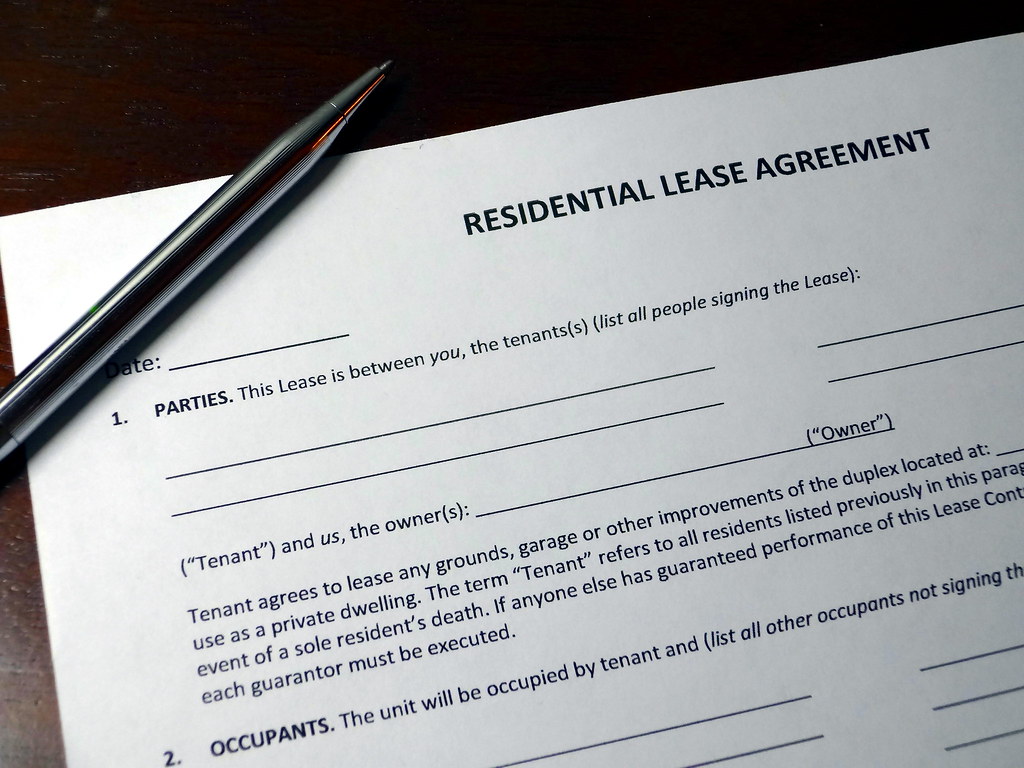

A written lease agreement setting out the terms of the landlord-
tenant relationship can be one of the most important documents
protecting the rights of both parties to such a relationship. While
oral agreements (unwritten) are permitted, they are difficult to 
interpret and/or enforce. For best results, get it in writing.
Who is a tenant?

A tenant is a person who pays rent to the landlord or the landlord's designated agent. The landlord-tenant relationship exists if there is an agreement to occupy another's property in exchange for money (or sometimes work). If "rent" is being paid to somebody other than the landlord under a contract, then there is no landlord-tenant relationship. This mistake often occurs when the "property manager" (I use that term loosely) drafts the contract and place themselves in the landlord position. Not only is it a misrepresentation, but this type of mistake fails to create privity between the landlord and the "tenant" who is technically an occupant. A ratification can correct the privity problem but must be done correctly so as to not run afoul of the requirements of Florida law.

If I am renting property from a tenant: am I a tenant?

You are a tenant if and only if you have paid rent to the property owner directly, not through the actual tenant unless that tenant is a property manager to the landlord as well. It would be highly recommended that you actually get a copy of the lease agreement that the tenant is operating under. Many leases forbid subleases and therefore the act of moving in without the actual landlord's permission would create grounds for the tenant (and you) to get evicted.

If you have never paid rent to the landlord or to the landlord's property manager or agent, you are an occupant. Occupant rights rise and fall with the lease agreement.


The tenant I am renting from is threatening to evict me, is that legal?

A tenant may not evict a person from the property. Only a landlord can file an eviction. A property manager can file a single count non-contested eviction to completion, but once the matter is contested only the landlord (if a natural person) can proceed pro se or hire an attorney to proceed on the landlord's behalf.

Who is an occupant?

An occupant is any person who resides on the landlord's property either through a sublease, as a long-term guest, or as a result of their familial relationship with the tenant (ie: minor children). An occupant has never paid rent to the landlord and therefore their rights rise and fall with the lease agreement. Occupants should never be listed on an eviction action. If you never paid rent to the landlord and happen to be served with an eviction complaint you can defend on privity and your status as a non-tenant.

Minor children are the most common (in my experience) occupant. They should not be listed on the lease agreement by name and instead as Minor Child 1, Minor Child 2,... etc, or by their initials. Remember that should an eviction action be filed the lease agreement needs to be attached. Minor children should never be named in a complaint and should not be named as a party defendant. It is a violation of the rules of procedure in Florida and depending on the disposition of the judge may 

So who can sue who?

Under Chapter 83, Florida Statutes a tenant and landlord may sue each other. An occupant, on the other hand, has no standing to sue the landlord or the tenant. Neither the landlord nor the tenant has standing to sue an occupant.

Landlord-tenant law in Florida seems relatively straightforward until attorneys get involved. The landmines found throughout the statutory framework in Florida can have financially devastating consequences for landlords, tenants, and occupants who are not familiar with the nuances of the practice area. For example:

- Landlord files an eviction action against Tenant1, Tenant2, and Occupant1. Occupant1 grabs an attorney who moves to dismiss and because there is no privity the dismissal is granted. A motion for attorney's fees for anywhere between $1000-$1500 can be anticipated.

On the flip side, Occupant1 does not obtain an attorney and fails to answer appropriately. The attorney who files the action files a motion for attorney's fees. If Occupant1 fails to notify the court that privity does not exist Occupant1 may be on the hook for attorney fees even if unjustified. Unrepresented occupants should realize that the court is not there to represent them.

- Property manager "landlord" files an eviction action against Tenant1, Tenant2, and Occupant1. All three go find attorneys who agree to represent them after discovering that the "landlord" is actually not the person who filed the suit, but a business entity owned by the "landlord". Three motions to dismiss are filed (all three for "lack of standing" and one for "privity) and are granted. Three motions for attorneys fees later and the property manager may be out between $1500 and $3000. Not good.

Learn from the mistakes of others.

The law firm the author words for has represented many tenants and occupants against landlords  or "landlords" who are later shocked to find that they are on the hook for thousands of dollars in attorney fees. The same firm represents landlords who are often at wits end dealing with tenants and occupants they cannot seem to have removed from the property.

Friday, January 10, 2014

The Protecting Tenants at Foreclosure Act of 2009

So the other day (or week, or month...) I got involved in a pro bono case involving an attempt to oust a couple of tenants from property that had recently been foreclosed upon. A writ of possession was issued under the foreclosure case itself (there was no eviction action) and I was asked to try to keep this from happening using the Protecting Tenants at Foreclosure Act of 2009 ("the Act").

What does the Act do? Well, to keep it short, the act prevents purchasers from kicking innocent bona fide tenants to the curve and in essence acts to force an assumption of any valid existing lease onto the new landlords. There is relatively little case law in Florida about this. So how do things work when this sort of thing comes up?

Step 1: The new landlord must give notice to vacate of at least 90 days to any bona fide tenant living on the property. A bona fide tenant is defined as being one who is unrelated (with limits) to the previous owner; entered into the lease agreement at arms-length; and pays rent which is reasonable relative to local market conditions. If the notice does not give 90 days, it is defective and cannot be enforced. See Fed. Nat'l Mort. Assoc. v. Jenkins et al., 21 Fla. L. Weekly Supp. 73b (Lake Cty. Ct., 2013), citing Logan v. US Bank National Association, Case No 10-55671 (9th Cir. USCA July 16, 2013); see also Joel v. HSBC Bank USA, Case No 10-13029 (11th Cir. USCA 2011). The Act does not protect squatters.

Step 2: Determine if the tenant is living on the property under a periodic tenancy or an active and enforceable lease agreement. If the tenant is in a periodic tenancy, the 90 day notice to vacate ripens 91 days after it is served and the tenant will be required to move. If the tenant is in an active and enforceable lease agreement, then the tenant must be allowed to live out the lease, subject to the following exception:


  • If the property is sold by the successor in interest to a third party purchaser who intends to occupy the property as a primary residence. In this event, the 90 day notice to vacate ripens only on the sale date where the third party purchaser takes (at least) constructive title.

F.A.Q.

- I have a valid lease, and the successor in interest has not found a purchaser. The successor in interest has given me a 90 day notice, is this legal?

It appears to be. The Act does not restrict when the notice to vacate is served after the Certificate of Title (in Florida) is entered. The successor in interest may issue a 90 day notice immediately, but it does not go into effect until the sale date to a purchaser intending to live on the property as a primary residence.

- When can a 90 day notice to vacate be given to me?

In Florida, the day the Certificate of Title gets entered into the docket, transferring title to the successor in interest. If you are living on a month-to-month basis, the 90 day notice to vacate can be issued anytime after the Certificate of Title and ripens on day 91.

- My 90 day notice to vacate does not fully describe the property I am supposed to vacate. Can I fight to stay in my home on the grounds that I've been asked to leave an ambiguous property?

There is nothing in the Act requiring the landlords to give you a "perfect notice." Attempting to remain on the property based on similar theories used to defend common eviction complaints will not likely work. A reasonable notice; given in a reasonable place; that reasonably identifies the parties and property in question will likely be considered sufficient. In fact, a judge may find that initiating litigation to maintain possession when the notice isn't perfect is dilatory in nature and may get an attorney in trouble. Then again, if the notice address is completely wrong ("123 Anywhere" instead of "456 Overthere") litigation may be appropriate.

- After my landlord's property was foreclosed upon, I murdered my neighbor. Is there anything in the Act that will protect me?

No. But the Act expires in 2014 if that clears something up.

If you have any questions regarding the Protecting Tenants at Foreclosure Act or if your old landlord has lost your rental property in foreclosure and the new landlord is trying to rush you out, you need to speak with an attorney who is familiar with the Act. Feel free to contact my firm at (386) 873-8422 or via email at jimmy.davis.esq@gmail.com.


Sunday, July 21, 2013

The Florida Bar Fee Arbitration Program: When Attorney-Client Relations Go South

Often, the attorney-client relationship is pretty tame. The issues to the client begin as subjectively major and once an attorney comes in, turns into an objectionably minor problem. The attorney helps to solve the problem for the client and both part ways. Hopefully, if the attorney in question did a really good job a continuous relationship begins.

But every once in a while (once so far for me), a client is so utterly disappointed with the outcome that he or she will complain to the Florida Bar and ask for their money back. This mostly happens when, for whatever reason, the case is lost. When such a complaint is made against an attorney, it is referred to the Florida Bar Fee Arbitration group.

It should be understood that there is no requirement for an attorney to agree to fee arbitration, although apparently there is an ethical requirement to strongly consider it. So when I ran across such a client, and the fee arbitration request came in, I ultimately decided to agree for two reasons:

The first was because I wanted to have the complaint heard by a third party neutral. Being a new attorney, it was important to me to find out if I did anything wrong. The second, I wanted to understand the process a little better and try to pass that experience on to other attorneys considering accepting an invitation: which I recommend.

The Facts: Briefly


It was a basic eviction case. The tenants had complaints about the home and issued a 7 day notice with intent to withhold. The landlord filed an eviction complaint in retaliation. I accepted the tenants' request to defend based on two meetings I had them, and submitted an answer to the complaint. Pretty cookie-cutter stuff at that time.

Only later did I find out that one of the tenants had engaged in acts against the landlord which were questionable at best. Also, upon deeper investigation of the facts almost all of the defenses needed to be withdrawn, leaving the defendant... well, practically defenseless. The case, which looked great on the surface, evolved into something quite flimsy. It was time to settle and mitigate any damages.

Luckily, the landlord was amicable to a swift settlement and what was finally agreed to ended up losing my client very little. The outcome had it proceeded to trial would have been financially devastating to my client. All in all, I walked away quite happy my client didn't get crushed under attorney fees, court costs, and moving costs.

My Clients' Point of View


As my clients were moving, and agitation at not having their day in court started to build up. The case was not yet closed when my clients called and emailed and threatened to report me to the Florida Bar. I sent them the website to the Florida Bar and promptly informed them that I was going to withdraw. The other attorney did not object. 

To my clients, I was the attorney who failed them. They believed I was unwilling to confront the other attorney, go to trial, and gave up on them. No doubt as they finished performing their end of the settlement agreement they had grown to resent me, and the experience probably slightly compounded the image problem attorneys have with the public (but that's another entry in this blog.)

My Point of View


From my point of view, I had protected my clients from exposing themselves to a losing eviction hearing. I kept their mistakes out of the public record, kept them from losing a lot more money in the long run, and got them out of the situation they had found themselves in. The judge would have (at the very least) frowned at me for bringing them before him. I would not have blamed him either. As an attorney, the requirement to look after my clients' best interests required that I advise them that this minor loss in the short term was acceptable compared to the major loss in the long term.

Then the fee arbitration process started:

The Invitation to Arbitrate


Shortly after my retainer was due, I received in the mail a letter putting me on notice that my client had filed a complaint against me and wanted to arbitrate my fees. I looked up whether I was required to or not, although I had a feeling it was voluntary based on the form. I then found this in the ethical rules "Since the fee arbitration rule (chapter 14) has been established by the bar to provide a procedure for resolution of fee disputes, the lawyer should conscientiously consider submitting to it."

I gave it some serious thought. I believed it would be a learning experience. I also recognized that although I believed I did nothing wrong, perhaps a more experienced arbitrator would think otherwise. It was important that I found out now if I was making an error before I continued my career.

I also thought that perhaps it would have some type of cathartic effect upon my clients to have their grievances heard out somewhere. They had gone through some fairly emotional times and lost a case they believed (and probably still believe) was a sure winner. Their anger towards me certainly wasn't helping I am sure.

Finally I thought of the irritation I was personally feeling towards them. I did the job, got them out of trouble, and thereafter became their new focus of attack. Why should I submit to arbitration? I was, after all, entitled to my fee. It was that attorney arrogance rearing it's ugly head like it sometimes does. 

I eventually signed the agreement and sent an outline of my side of the case (the clients sent their point of view initially) to be forwarded to the assigned arbitrator. I brought out my case folder and gathered the evidence I believed would be pertinent to winning my argument.

Silence... and then...


I got the letter in the mail. The case was assigned to an arbitrator close by. There was a date, a place, and a time. I marked it on my calendar and reviewed all the evidence for the case. With very little, I believed I had everything I needed to prove I was entitled to my fee:
  • The retainer agreement;
  • The evidence as to why my client would have lost;
  • Email messages approving a settlement approach;
  • A signed approval to settle on certain terms;
  • Another email agreeing to the terms I arrived at with the other attorney; and
  • Further emails which showed why the case was going to be lost had it proceeded to trial.
I taped it up in a folder, which felt quite thin and insubstantial. I went about my business as I waited for the hearing date.

The Hearing


That morning I got up and reviewed my thin little folder. As the time for the hearing approached, I headed out to the court house where it was to be held. I was a bit nervous, but still pretty confident. When I arrived I was worried I was going to be late. I wondered if they retained an attorney to represent them. There were rains, traffic was heavy because of it, and I elected to take the back roads... which still almost had me arriving late. It was sort of embarrassing. I was never late for a court house function for any of my clients, and here I was, about to arrive late to defend myself.

My former clients were already there and I arrived with a few minutes to spare. Luckily for me, the arbitrator was caught in the same traffic and was late himself. It gave me a chance to go over my case for the last time. He looked to be in a good mood when he arrived, and even cracked a joke at his own expense.

We all sat and were sworn in. The arbitrator started by allowing me to open. I stayed on topic, presenting fact after fact as the arbitrator guided the hearing. He completely destroyed my well thought out plan for what should be presented first, second, and so on... apparently he had his own ideas. Since I had never been to arbitration before, I was grateful he was directing us.

He then asked my clients to present their case. They had a mountain of paperwork, folders, tape recordings, emails, etc. Their emotions, so familiar from a few months back, bubbled up very quickly. They accused me of letting them down, disappointing them, caving in when faced with another attorney, etc. They compared their plight to the Zimmerman trial, attacked the landlord, and the arbitrator patiently struggled to keep them focused as they tried to explain their interpretation of the law. While they vented I took notes and remained silent.

I rebutted a few points and they ended up admitting my strategy in the case worked out for them later on (although it was poorly executed without an attorney), and I finally rested my case. Visibly frustrated, and likely thinking the entire system was rigged against them, they followed suit. The arbitrator had attempted to explain to them that we (collectively), as attorneys, had certain ethical obligations. That sometimes a fight is started but cannot be won. He spoke about buyer's remorse. He mentioned that despite it's imperfections, we had a great justice system. I do not believed he convinced them.

After all the evidence was given, he announced he would review the case and issue a ruling in a few days. Great I thought, more waiting. My former clients seemed frustrated. That cathartic effect I hoped they would experience seemed elusive. 

The Judgment


A little while after the hearing a letter appeared in my P.O. Box from the arbitrator. It was a detailed list of the facts presented and the arbitrator's opinion. I won. I felt vindicated that I had not acted improperly. 

Still, I think back on my former clients every once in a while. How did I lose control of the situation? Did I ever have control to begin with? It certainly has changed how I vet my clients before accepting employment. I still enjoy helping tenants fight oppressive landlords, but in this case I think that perhaps I was so focused on the landlord as a target that I had missed the shortcomings of my clients. My professor once told me these situations are why it's called the "practice" of law, because it takes practice.

Would I Recommend the Program?


Yes. It is an opportunity for clients to air their grievances. Even if those grievances are not founded on any legal theory, running a law firm is (at least partly) an exercise in customer satisfaction. The fact that one is brought before a fee arbitration hearing is proof positive the client was not satisfied. Like all businesses, satisfying all of your customers is not always possible. But from the failures, lessons can certainly be extracted, improvements implemented to avoid similar problems in the future, and of course a nice blog entry can be drafted for others to read and learn from your experience.

The Florida Bar Fee Arbitration program is a convenient and well intended program. Like other aspects of the law, it is likely not perfect. But I highly recommend every attorney in Florida experiencing such complaints from a client strongly consider this avenue to resolve the dispute. If this happens to me again (and I hope it does not), I will certainly avail myself of its services.

If you are the target of an irritated client and would like to go over what is going to happen, call me or email me. I'll be happy to speak with you.

Sunday, June 9, 2013

Do I have to pay rent into the court registry in Florida?

Imagine that a neighbor accuses you of a civil wrongdoing. He claims you destroyed his prized garden gnome, an original worth around $14k. Only you are innocent, and you have an alibi: you were clocked in and working at the time the gnome was claimed to have been destroyed. Still outraged, he scurries off to the local court and files suit against you. Papers are served detailing the facts as your neighbor sees it: Neighbor v. Gnome Killer. You laugh because your manager agreed to come and testify as to your alibi AND bring the software printouts proving you were at work.

But you look down and see instructions from the court: "In order to bring up any defense you must pay into the court registry the amount in dispute. Failing to do so will entitle the Plaintiff to a default ruling." Huh? You have to pay $14k just to have a judge hear you out. Sounds ridiculous? I agree.

However, in several states, including Florida this is a reality for certain defendants. If your landlord wants to evict you for non-payment, you must pay into the court registry an amount of the uncontested rent or the landlord is entitled to a default against you. Even if the landlord violated your rights (such as proper notice) some courts set that violation aside and refuse to hear the defendant unless you cough up the cash.

The reasoning I imagine is that once the landlord proves his or her case they are entitled to payment immediately without having to hunt you down. But this is not a good enough reason. Plenty of lawsuits progress without defendants having to pay to be heard by the judge. Arguably this is a violation of your Constitutional rights. If you are being asked to defend such an eviction, contact this law office, we will be pleased to go over your specific case.

---

Jimmy Davis is a practicing attorney in the Central Florida area. He practices in many areas of law, but is most interested in family and business law. He is particularly interested in the aftermath of Constitutional and Florida Constitutional rulings and how they help or hinder his clients' interests. He is available for free consultations on a variety of legal topics. 

Visit www.lawofficesofjimmyallendavis.com for more information.

Wednesday, March 20, 2013

Expert Systems in Heavily Statutory Areas of Law

The Problem


Law is (almost by necessity) a human endeavor. The abstract understanding required to interpret law and create an argument beneficial to one's client is difficult to master and near impossible to translate into code at this time. But there is little to no effort being made into research that would take reduce to programming areas of law which are strictly interpreted according to statute.

Certainly, blogs such as this one are designed and maintained by attorneys to educate the public as best as one can. Truth be told, however, there is almost no substitute for legal training. But certain areas of law are heavily interpreted by statutes, such as Fla. Stat. Ch. 83 (2012), Florida's landlord tenant laws. This set of laws and the procedures involved are easily reduced to programming capable of not only helping non-lawyers, but attorneys new to landlord tenant issues.

One of the worst problems facing the legal field today is the inability for the poor and underprivileged to obtain solid legal counsel when they need it the most. Florida issues are often addressed by attorneys at local legal aid groups, where panicked (and sometimes embarrassed) tenants facing an eviction are staring at immediate homelessness if they are being forced to leave within the quick procedural time frames under Fla. Stat. Ch. 51.011. Answers are often informal, and disjointed, leaving already frazzled judges to muddle their way through a hearing to see if a defense even exists.

The result is a legal battleground which is tilted in favor of landlords, even those who are violating the rights of their tenants.

The Solution


How does one get help to the unknown scores of people getting evicted who are afraid to approach and consult an attorney at legal aid? How can one include those who do not know about legal aid but are hunting for information online? What about attorneys who are new to the practice of landlord tenant law?

The answer is already here: artificial intelligence and expert systems are already making some headway into other fields, like medicine. See this experimental A.I. doctor online so see an example. Mistakes will be made at first, but the potential exists to allow patients to speak with an A.I. doctor first, and then take that doctor's recommendation to an actual doctor. As development continues, and patients gain more confidence in the system, the error rate will plummet and doctors will be able to save tons of time diagnosing patients and treating them.

So goes the doctor, so should the lawyer. There is little to excuse why a lucrative field of professionals cannot begin creating at least an expert system to assist the poor on the internet. This system could not only help the poor craft defenses in the absence of an attorney, but help attorneys insure that all bases are covered when they themselves are helping a patient... I mean, client.

This simultaneously creates a clearing house for the poor needing assistance, and improves the quality of legal representation in the Profession.

Implementation


The author and the Law Offices of Jimmy Allen Davis, P.L. are currently writing a program to help landlords and tenants (first) to navigate their way through the eviction process. The program is called eLegal (see what I did there?) and is in pre-beta development at the moment. No link is available yet, but once it is, this post will be edited to reflect that.

The goal is to of course improve the Profession through automation, encourage more "professional" pro se activity, and provide affordable access to legal resources for those unable to afford a biological attorney. The vision is to create a A.I. partner/paralegal for a law firm.

---

Jimmy Davis is a practicing attorney in the Central Florida area. He practices in many areas of law, but is most interested in family and business law. He is particularly interested in the aftermath of Constitutional and Florida Constitutional rulings and how they help or hinder his clients' interests. He is available for free consultations on a variety of legal topics. 

Visit www.lawofficesofjimmyallendavis.com for more information.